In the age of continuous delivery, simply building a feature is no longer enough. High-stakes software—whether it’s a global fintech platform or a regulated healthcare application—requires a pre-delivery assurance framework that can prove resilience, stability, and legal compliance under duress.
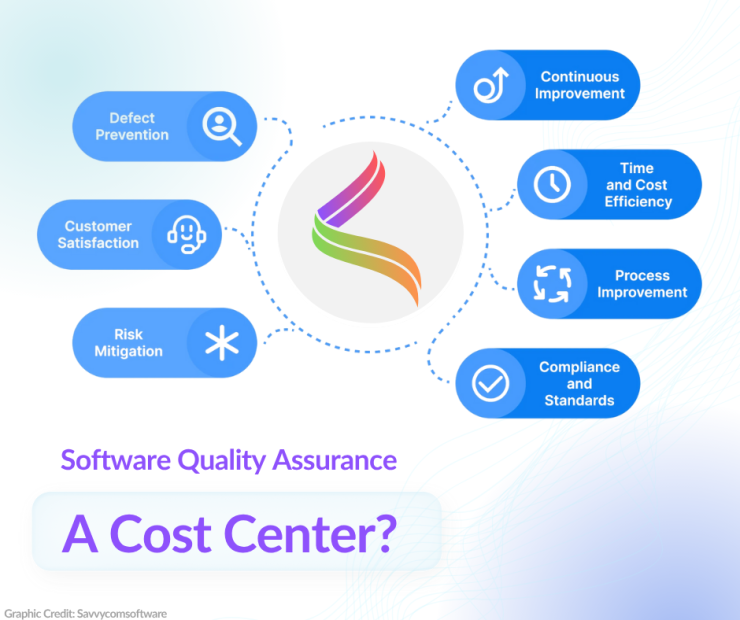
For Snaptec, quality assurance is not a cost center; it is a meticulously engineered, auditable discipline. Here is how we structure our validation funnel, transform our service model, and achieve mastery over the world’s most demanding regulatory standards.
1. The Engineering Discipline: Shifting Quality Assurance Left
We anchor our process in the Software Testing Life Cycle (STLC), viewing the initial phases as the most critical defense against future production defects. The goal is to "shift left"—proactively managing risk before a single test case is executed.
A. The Assurance Backbone: Beyond Test Execution
The STLC’s preparatory phases—Requirement Analysis, Test Planning, and Test Case Development—are where we define our assurance strategy. This involves establishing two key metrics up front: Requirements Coverage (ensuring every contractual need is testable) and Risk Coverage (prioritizing high-impact or vulnerable areas). This initial analysis dictates the eventual criteria for client acceptance.
B. The Validation Funnel: From Code to System
Our pre-delivery testing progresses through a strict hierarchy, culminating in client-facing validation:
- Unit & Integration Testing: These low-level tests, often automated and run by developers, verify individual code components and confirm that combined units (e.g., API calls, microservices) interact correctly.
- System Testing: This is the critical gate where the complete integrated system is validated against high-level requirements. For example, testing an airline system to ensure end-to-end user flows—from searching to secured payment confirmation—execute correctly under simulated real-time conditions.
- Acceptance Testing (UAT): This formal phase involves the client or end-user verifying that the software meets their explicit business needs and is acceptable for delivery. It acts as the final communication loop, ensuring the product aligns with user experience and functional demands.
C. Non-Functional Resilience Checks
Before the system leaves our environment, we rigorously test its operational readiness, which is often more critical than basic function:
- Performance Testing: We test responsiveness and stability under various load conditions, ensuring the application handles peak traffic without resource bottlenecks (CPU, RAM) and maintains industry-standard response times.
- Security Testing: Assessment of system vulnerability against internal and external threats, focused on validating data protection, access controls, and adherence to specific security standards.
- Usability Testing: Evaluating the user interface (UI) from the end-user’s perspective, focusing on navigation, design, and time-to-task completion, which directly impacts customer satisfaction.
2. Transition to TaaS: Leveraging Operational Leverage
When offering testing as a service (TaaS), the operating model must transition from a capital-heavy internal function to a lean, cloud-based platform. This shift is driven by three core operational changes:
A. CapEx to OpEx Transformation
TaaS fundamentally changes the financial structure. We eliminate the need for clients to invest capital expenditure (CapEx) in dedicated testing infrastructure, software licenses, and full-time expertise. Instead, we offer a pay-as-you-go operational expenditure (OpEx) model, leveraging our specialized, cloud-based test environments. This infrastructure is designed to be highly flexible, easily adapting to rapidly changing project scopes and scalability demands.
B. Automation and Optimization Mandate
To deliver the promise of TaaS—faster time-to-market and enhanced ROI—we must maximize automation, particularly in complex areas like User Acceptance Testing (UAT). Our strategy follows a phased optimization approach:
- Transformation Phase: Identifying reusable components and building robust, automated regression test beds.
- Optimization Phase: Continuous improvement focused on reducing the overall testing cycle time using proprietary accelerators and pre-built standard test cases.
C. Service Design and Pricing
Our pricing models are consumption-based (usage-based/pay-as-you-go), ensuring revenue directly aligns with the customer’s success (e.g., charging per API call or per compute second used for a performance test).8 Furthermore, pricing tiers are carefully designed to gate meaningful capabilities, such as specific service level agreement (SLA) guarantees, providing clear value alignment.
3. Compliance Mastery: The European Standard and Regulatory Rigor
A TaaS provider must integrate regulatory compliance directly into the technical validation process, treating it as an embedded feature, not a checklist item.
A. EU Regulatory Deep Dive
- GDPR Technical Validation: Compliance testing ensures technical enforcement of user rights. This goes beyond policy: we rigorously test the implementation of encryption, tight access controls, and data minimization scripts. Most critically, we must validate the operational capability to detect, analyze, and report a data breach to authorities within the 72-hour notification mandate. This operational readiness is a defining technical challenge.
- HIPAA Safeguards (U.S.): For Protected Health Information (PHI), our testing focuses on enforcing technical safeguards: unique logins, multi-factor authentication (MFA), automated log-offs, and verifying that transmission occurs over encrypted lines (VPNs). We also confirm that Audit Controls log every interaction with PHI and that Integrity Controls (like digital signatures) prevent tampering.
- EU AI Act (High-Risk Systems): For AI models operating in the EU, requirements are stringent. Technical testing must verify:
- Data Governance: Confirmation that training, validation, and testing datasets are relevant, representative, and, to the highest extent possible, complete and error-free.
- Adversarial Testing: For General Purpose AI (GPAI) systems that pose systemic risk, we conduct specialized adversarial testing to identify and mitigate systemic risks and vulnerabilities caused by malicious deployment.
B. Standardization and Workforce Credibility
Our processes are governed by the internationally recognized ISO/IEC/IEEE 29119 series, which defines the global standards for test processes, documentation, and techniques. This framework ensures our deliverables meet consistent global expectations. Furthermore, our technical team maintains certifications from the International Software Testing Qualifications Board (ISTQB).15 This coupling of process maturity (ISO) and proven technical competency (ISTQB) is non-negotiable for client trust.
4. The Final Deliverable: Quantifiable Confidence
The final deliverable is not just functional software; it is the auditable evidence of quality—the Test Summary Report (TSR). This document serves as the formal contractual proof required for client sign-off.
A. Anatomy of the Test Summary Report
A robust TSR must follow a standardized format, providing clarity for both technical and executive stakeholders. Key technical sections include:
- Test Execution Summary: Detailed counts of test cases planned, executed, passed, failed, and blocked.
- Defect Report Summary: A condensed report highlighting defect IDs, severity, and the status (resolved or unresolved), explicitly listing any critical issues that pose a release roadblock.
- Areas Not Covered: Crucially, this section documents any functional areas or risks that were explicitly scoped out of the testing, ensuring transparency regarding known risk exposures.
B. The Metrics of Trust
For client acceptance, we focus on high-impact metrics that quantify risk mitigation and process quality:
|
Metric |
Definition |
Value to Client Stakeholder |
|
Requirements Coverage (%) |
Percentage of contractual requirements linked to and verified by executed tests. |
Proof of Obligation: Confirms every mandated feature has been validated. |
|
Escaped Bugs (Count) |
Number of defects reported by the customer post-delivery. |
Process Effectiveness: The ultimate gauge of QA process quality and product stability. |
|
Risk Coverage (%) |
Percentage of identified high-business or technical risks that were adequately tested. |
Risk Control: Assurance that the most vulnerable areas were prioritized. |
By delivering software alongside this level of rigorous technical documentation and quantifiable evidence, Snaptec provides not just a product, but a guaranteed, auditable foundation of trust.